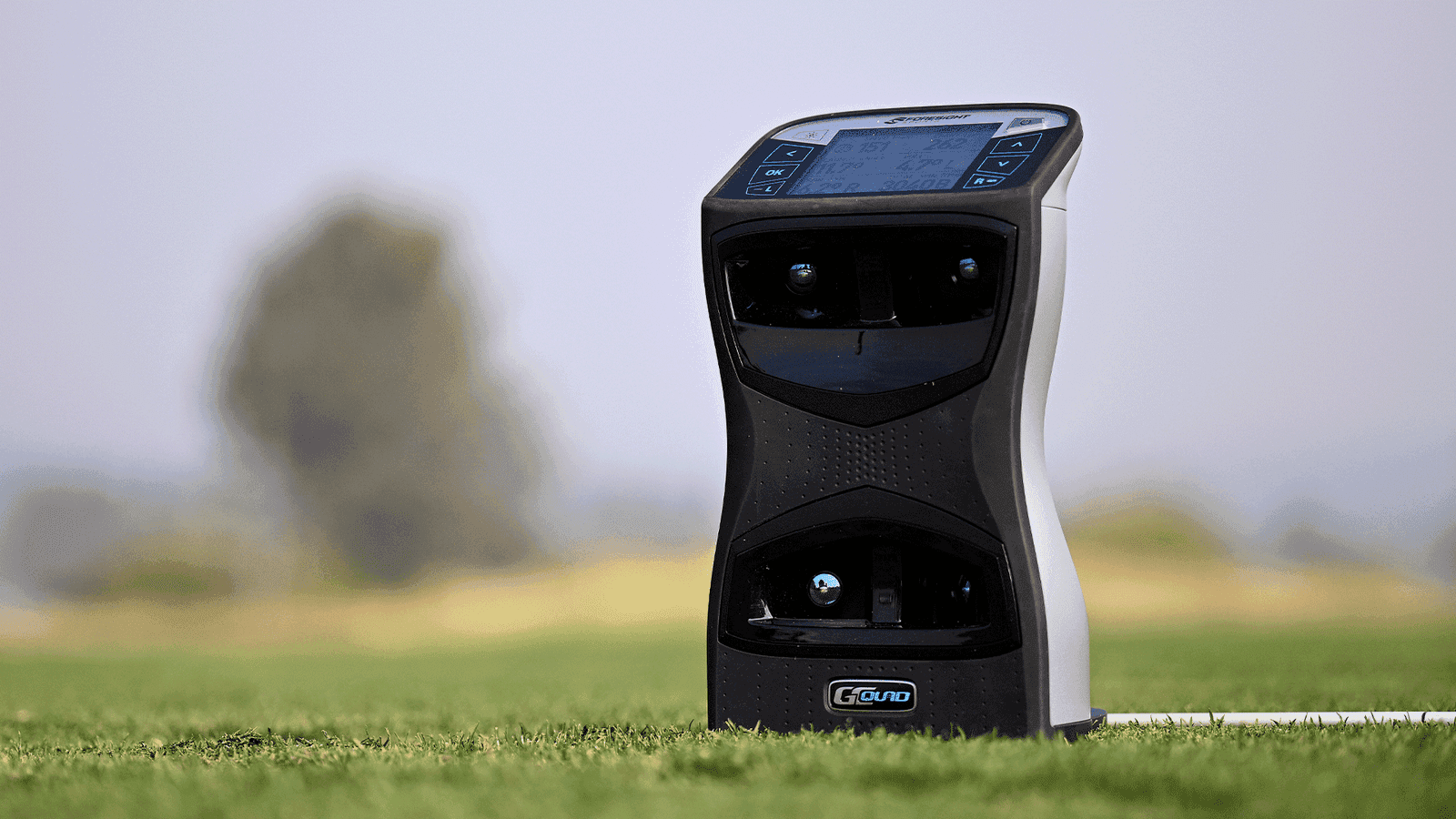
Foresight Sports now sells four portable launch monitors that span more than $18,000, from the $1,699 GC2 to the $19,999 QuadMAX. All four use the same basic idea: high-speed cameras photograph the ball (and, on three of them, the club) at impact, so the numbers are measured rather than projected from a radar model. What you get for the extra money is more cameras, more club data, a bigger hitting zone, and better hardware for long days on the range.
2026 also changed the math. Foresight brought back the GC2 name on October 1, cut the GC3 to $3,999, and moved its software to an annual membership called Foresight+, with a new simulator called Foresight Premier. If you last priced a Foresight unit a year ago, most of what you remember is out of date.
This guide covers every current portable model, what each one measures, what the software really costs over three years, how each unit works on the range and on the course, and what else you need to build a simulator around one. Prices are U.S. list prices from Foresight as of late October 2026. Confirm them at checkout, since sales come and go.
In this guide
Foresight GC2 · GC3 · GCQuad · QuadMAX
The quick answer
Foresight GC2 ($1,699): best for carry gapping on a budget. Ball data only. Buy it if you want trusted carry and spin numbers for yardages and tournament prep and don't need to see club delivery.
Foresight GC3 ($3,999 on sale, $6,999 list): best value for most competitive amateurs. Adds clubhead speed, smash factor, path and angle of attack, and club data is free with no membership.
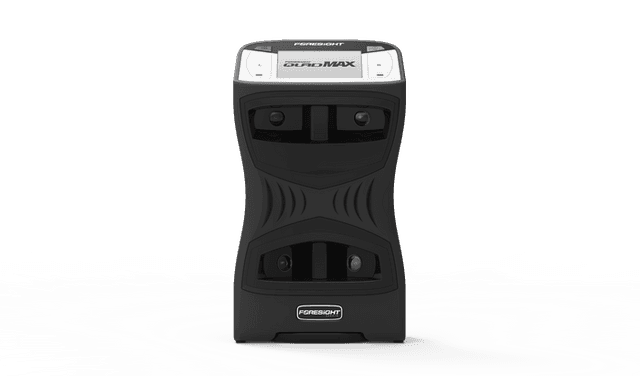
Foresight GCQuad ($15,999): best for coaches and club fitters. Adds face angle, impact location, dynamic loft and lie, closure rate, and a hitting zone more than three times the GC3's.
Foresight QuadMAX ($19,999): best for buyers who want everything in one box. GCQuad data plus a touchscreen, a lighter body, longer battery life, extra on-device ball data, and putting analysis included.
The 2026 Foresight lineup at a glance
| Spec | GC2 | GC3 | GCQuad | QuadMAX |
|---|---|---|---|---|
| Price (Oct. 2026) | $1,699 | $3,999 sale ($6,999 list) | $15,999 | $19,999 |
| Cameras | 2 | 3 (Triscopic) | 4 (Quadrascopic) | 4 (Quadrascopic) |
| Ball data | Yes | Yes | Yes | Yes, plus apex, descent angle and offline on the unit |
| Club data | None | Club speed, smash, path, angle of attack | Adds face angle, impact location, loft/lie, closure rate | Same as GCQuad |
| Hitting zone | 123 sq. in. (wedge-shaped) | 7 x 10 in. | 18 x 14 in. | 18 x 14 in. |
| Weight | 4.5 lb | 5 lb | 7.5 lb | 6.3 lb |
| Battery | 5–7 hrs, built in | 5–7 hrs, built in | 6–8 hrs, removable | 7–9 hrs, removable |
| Display | 2.8-in. color screen (not touch) | Touchscreen LCD | Display with button controls | Touchscreen |
| Putting analysis | Basic putting reads | No | Paid add-on | Included |
| Warranty | 1 year | 1 year | 2 years | 2 years |
Foresight also sells the Falcon ($16,999), a four-camera unit that mounts to the ceiling of a simulator room. It reports GCQuad-level club data, has a much larger hitting area, and is indoor only. It's worth a look if you're building a permanent bay and don't want anything on the floor, but it's not a range-bag unit, so this guide focuses on the portable four.
What changed in 2026
The GC2 is back, and it's a new unit
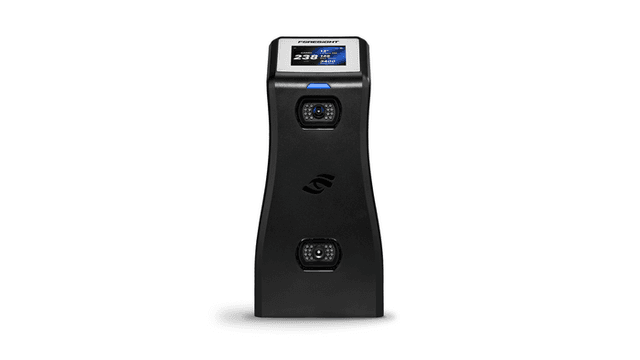
The original GC2 (2010) was the two-camera box that made Foresight a fixture on tour practice ranges. The 2026 GC2 keeps the formula of two cameras and ball data only, but it's built on the GC3's frame, adds Foresight's first color display, and costs $1,699. We covered the launch in detail in Foresight Brings Back the GC2.
The GC3 dropped to $3,999
Foresight's own store lists the GC3 at $3,999, down from $6,999. That moves it from the middle of the market to roughly the price of the Bushnell Launch Pro, which is built on the same platform. Retailers have also been bundling it with a Bushnell Pro X3 LINK rangefinder at the same price. Foresight hasn't said when the sale ends.
Software moved to Foresight+ and Premier
Every Foresight and Bushnell launch monitor bought new or certified pre-owned since September 18, 2026 runs on Foresight+, an annual membership tied to your account rather than the hardware. Foresight Premier replaces FSX Play and FSX Pro as the PC simulator. New units no longer ship with FSX. The full breakdown is below, and our Foresight Premier explainer covers the platform itself.
Foresight GC2: ball data for gapping and tournament prep
Price: $1,699. Best for: amateurs who want trustworthy carry numbers and a unit simple enough to live in the range bag.
The GC2 measures ball speed, launch angle, launch direction, total spin, backspin, sidespin, spin axis and carry. From those, the software calculates total distance, offline, peak height, descent angle and hang time. That's it. There's no clubhead speed, smash factor, path, face angle or angle of attack, and no software update will add them.
For a lot of tournament players, that's fine. Building a yardage book, checking wedge gaps before a qualifier, and deciding whether a new 3-wood fills the hole between driver and hybrid all come down to ball speed, launch, spin and carry. If your coach already has a GCQuad or TrackMan for delivery work, a GC2 at home or on the range covers the rest.
Hardware: 4.5 pounds, 5.45 x 4.6 x 11.9 inches, with a 2.8-inch color screen on top that's readable in sunlight. The screen isn't a touchscreen; it rotates between two data views you set in the app. It connects by Wi-Fi, Ethernet, USB-C and Bluetooth, and creates its own Wi-Fi network so a laptop can connect directly. Foresight lists battery life at 5 to 7 hours.
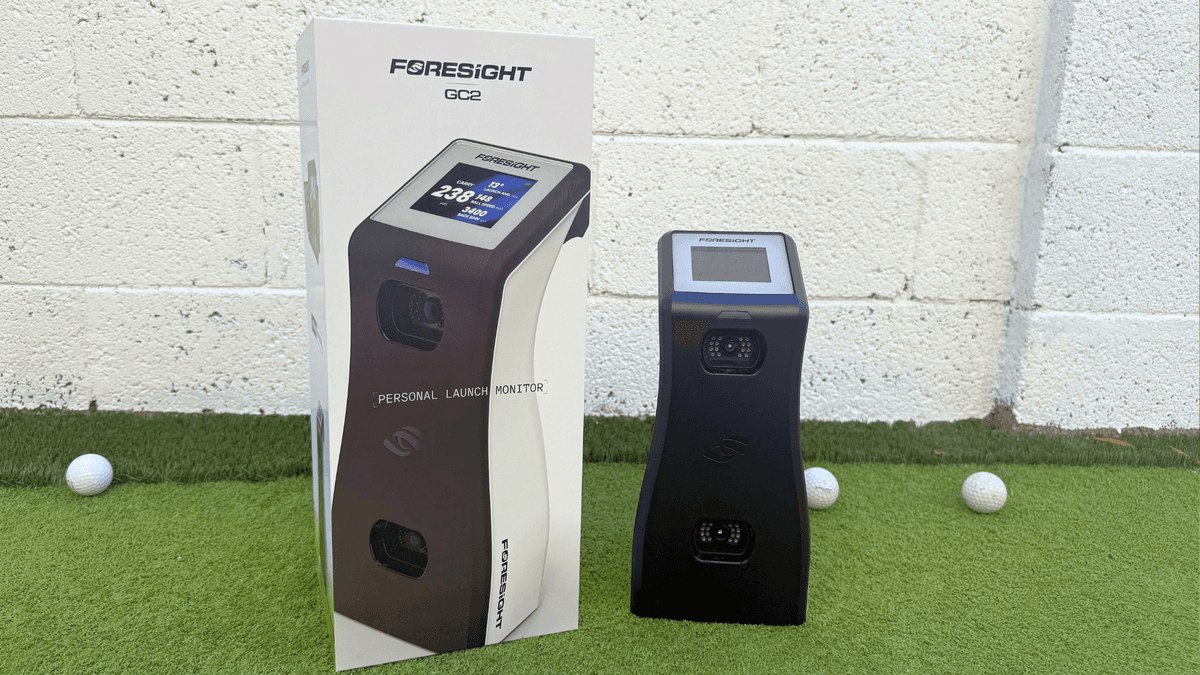
Hitting zone: Foresight lists 123 square inches, but the shape matters more than the number. The zone is a trapezoid that is only about 4 inches wide near the unit and widens to about 14 inches farther away. The ball sits well off the unit, so placement takes a little practice.
What's in the box: the unit, power adapter and cable, an alignment stick, and a 30-day trial of Foresight+ Gold with Course Pass Pro. There's a one-year warranty.
Skip it if: you want to see why a shot curved, not just that it did. You'll want club path and, ideally, face angle. Players planning heavy GSPro use should also run the subscription numbers below, since that requires Gold.
Our hands-on GC2 review, tested against the GC3 on mats and grass with driver, irons and wedges, is coming soon.
Foresight GC3: the value pick for competitive amateurs
Price: $3,999 (sale), $6,999 list. Best for: serious players who want measured ball data plus the club numbers that explain it.
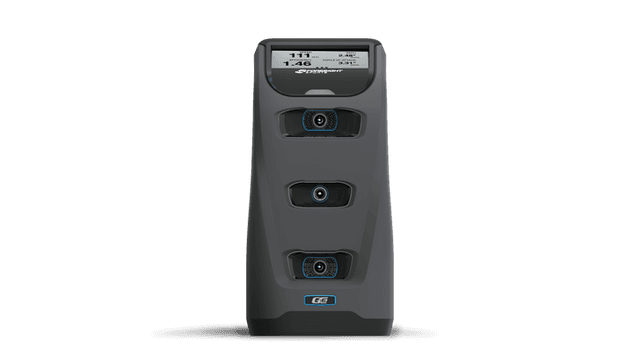
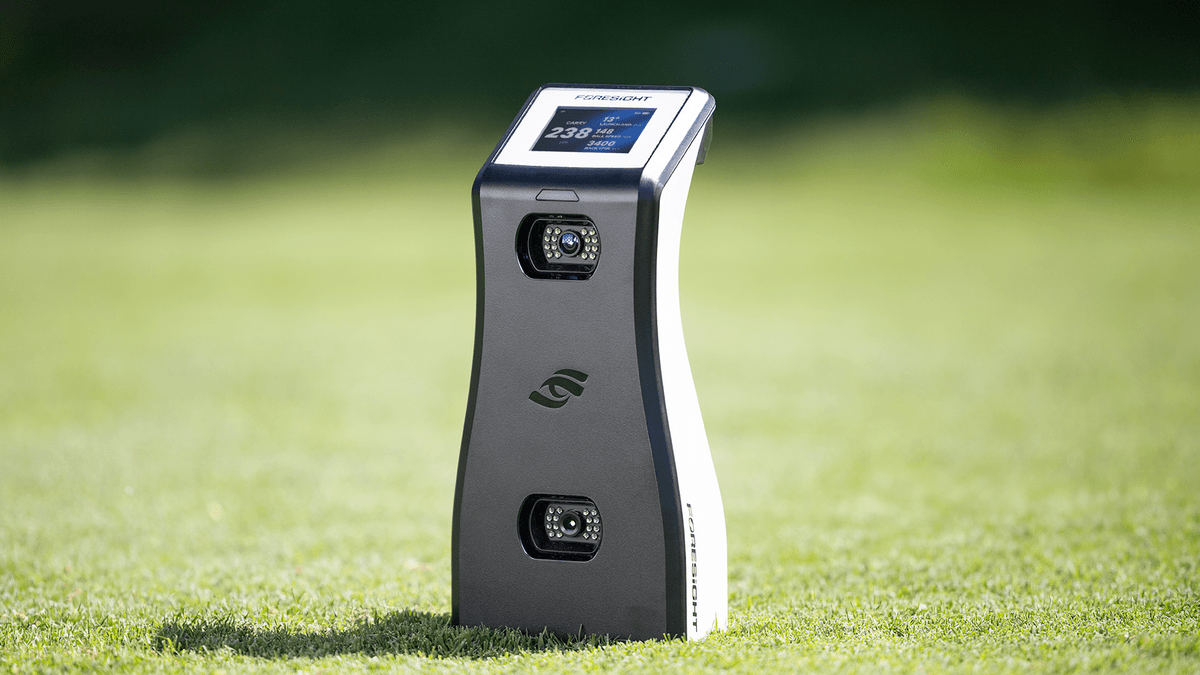
The GC3 adds a third camera and four club metrics: clubhead speed, smash factor, club path and angle of attack. Path and attack angle are the two delivery numbers most amateurs actually work on, whether that's shallowing out a steep iron swing or hitting up on driver for more carry. Full club data relies on small reflective markers on the clubface.
One detail that matters under the new software: on the GC3, club data is part of the free tier. You can own the unit and see ball and club numbers in the Foresight app without paying for a membership. (Bushnell Launch Pro owners need at least Silver for club data.)
Hardware: 5 pounds, 6 x 12 x 5 inches, with a rubberized shell, a touchscreen LCD, Wi-Fi, Ethernet, Bluetooth and USB-C. It has a built-in barometric sensor, so carry numbers account for elevation, which matters if you practice in Denver or Phoenix and play at sea level. Battery life is 5 to 7 hours on a built-in, non-removable battery. Warranty is one year in the U.S.
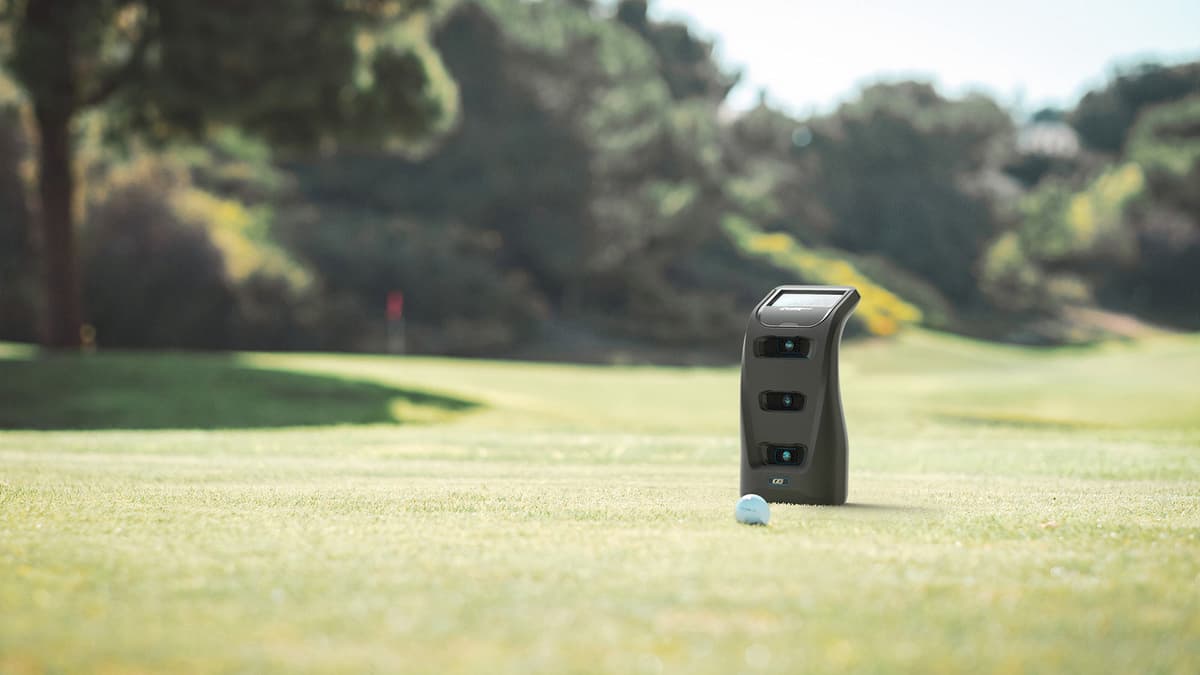
Hitting zone: 7 x 10 inches, the smallest in the lineup. It's fine on a mat. On grass, you'll be moving the unit or the ball more often than you would with a GCQuad.
GC3 vs. GC3S: the GC3S is a lower-priced GC3 variant that Foresight is phasing out. Remaining stock has been selling around $3,799 with a rangefinder and a year of software. At the GC3's current price, the difference is small, so compare what's bundled.
Skip it if: you're a coach or fitter who needs face angle and impact location, or you mainly hit off grass and want a larger hitting zone.
Foresight GCQuad: the fitting-bay standard
Price: $15,999 (a fully loaded bundle with putting is $17,999). Best for: teaching professionals, club fitters and players who want the full picture of club delivery.
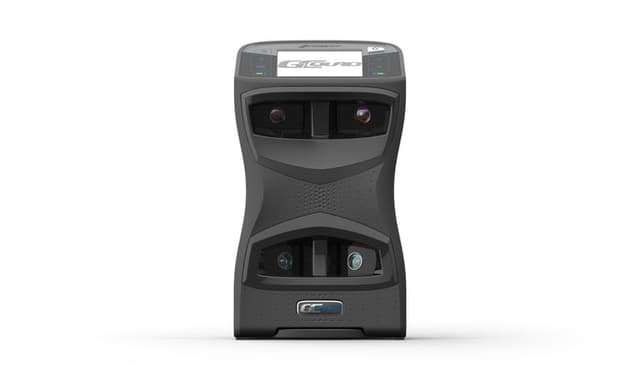
The GCQuad's fourth camera unlocks the numbers that explain ball flight at its source: face angle, impact location on the face, dynamic loft and lie at impact, and closure rate. Pair face angle with the club path the GC3 already gives you and you have face-to-path, the single most useful number for understanding curvature. Impact location tells you whether a distance loss is a strike problem or a speed problem. Loft and lie at impact are core fitting data.
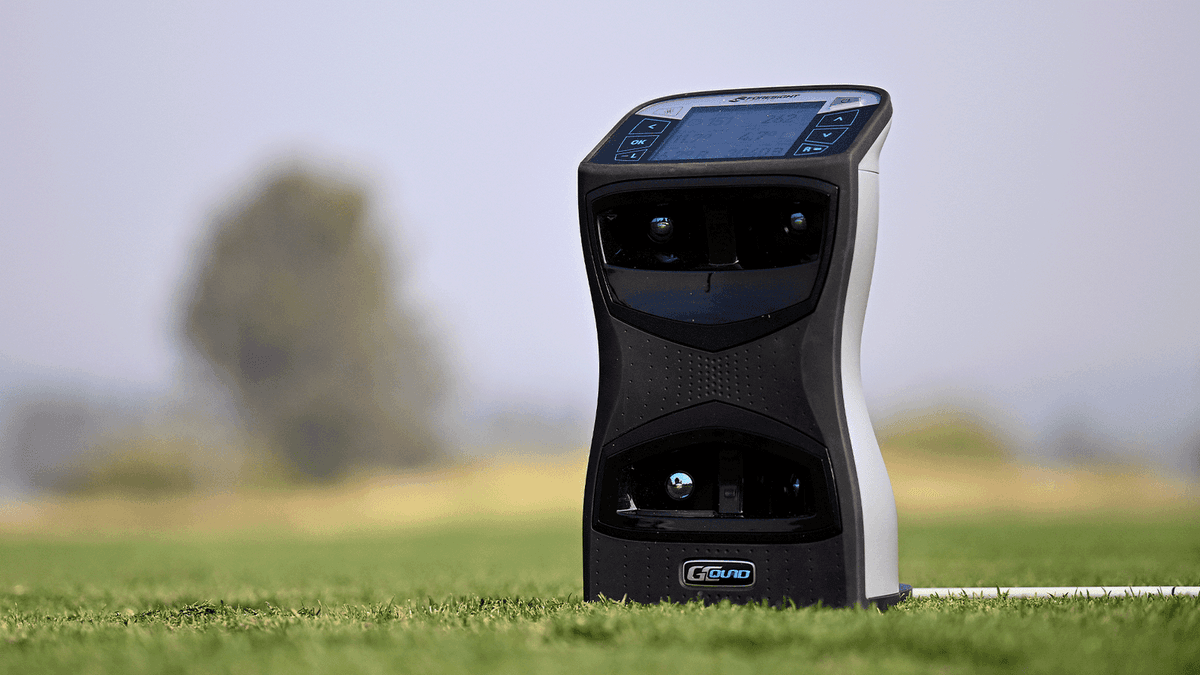
Hardware: 7.5 pounds, 7 x 4 x 12.5 inches, 18 x 14-inch hitting zone, Wi-Fi, Ethernet and USB-C. The battery is removable and field swappable, rated for 6 to 8 hours, so a spare gets you through a full day of lessons or fittings. Warranty is two years.
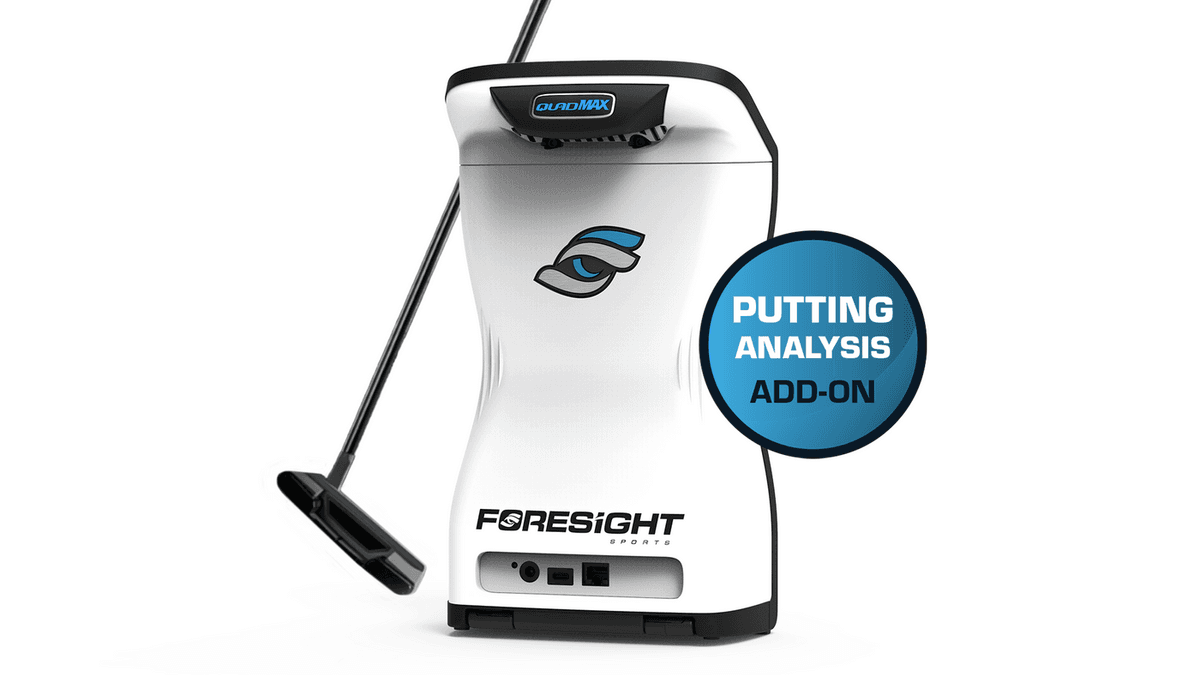
Putting: optional. Foresight's Essential Putting Analysis add-on reads ball speed, launch, skid and roll plus putter delivery. Retailers list it at about $2,500.
Skip it if: you don't work with a coach on delivery. Most players can't act on closure rate by themselves, and the GC3 covers the rest for about a quarter of the price.
Foresight QuadMAX: the flagship
Price: $19,999. Best for: buyers who want every metric, the best hardware, and putting without add-ons.
The QuadMAX uses the same four-camera system and the same club data as the GCQuad. The upgrades are practical:
Touchscreen with an automatic backlight, replacing the GCQuad's buttons.
Lighter: 6.3 pounds versus 7.5, thanks to magnesium internals, with a wider handle.
Longer battery: removable 12,000mAh battery rated for 7 to 9 hours.
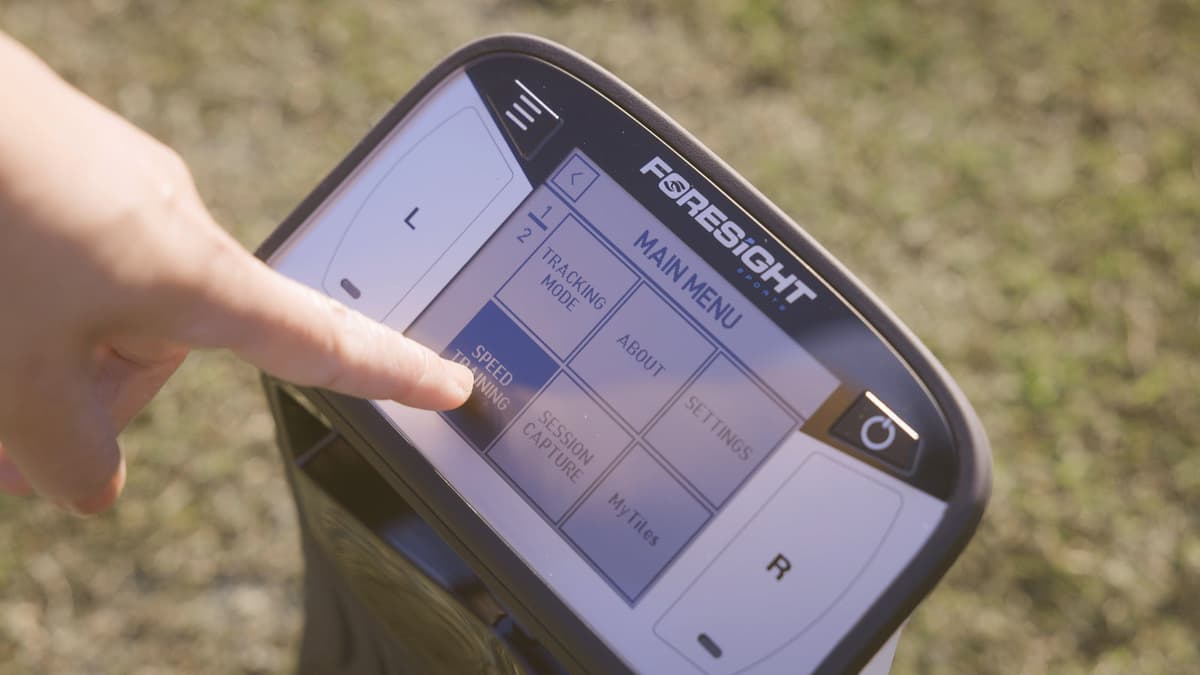
More data on the unit: ball apex, descent angle and offline, plus MyTiles to choose what appears on screen.
Putting included: Essential Putting Analysis comes standard.
Speed training mode that reads swing speed without a ball.
Connectivity: Wi-Fi, Ethernet, Bluetooth, USB-C and NFC, with internal storage for sessions.
Here's the number that decides it: the QuadMAX costs $4,000 more than a GCQuad, and the putting add-on alone is worth about $2,500 of that. If you'd buy putting analysis for a GCQuad anyway, the QuadMAX's real premium is closer to $1,500 for a lighter unit, a touchscreen and an extra hour of battery. If you'll never use putting data, the GCQuad is the better buy. Our original QuadMAX review has more on the hardware.
Ball data vs. club data: what competitive golfers actually need
The step from GC2 to GC3 to GCQuad is really a question of what you're trying to fix.
| GC2 | GC3 | GCQuad | QuadMAX | |
|---|---|---|---|---|
| Ball speed, launch, spin, carry | ● | ● | ● | ● |
| Clubhead speed & smash factor | – | ● | ● | ● |
| Club path & angle of attack | – | ● | ● | ● |
| Face angle & face-to-path | – | – | ● | ● |
| Impact location | – | – | ● | ● |
| Dynamic loft & lie, closure rate | – | – | ● | ● |
| Apex, descent, offline on the unit | – | – | – | ● |
| Full putting analysis | – | – | ○ | ● |
| Swappable battery | – | – | ● | ● |
| Touchscreen | – | ● | – | ● |
Yardages and gapping (every club's carry, spin and peak height): GC2 or better. This is the job most tournament players need a launch monitor for.
Equipment testing (shafts, heads, balls): GC3 or better. Smash factor and attack angle show whether a gain comes from the club or from the swing you made that day.
Swing changes (path, attack angle): GC3 or better.
Curvature, strike and fitting (face-to-path, impact location, dynamic loft and lie): GCQuad or QuadMAX.
Putting (speed, skid, roll, putter face and path): QuadMAX, or GCQuad with the add-on.
For a deeper side-by-side of the two middle units, see our GC3 vs. GCQuad buying guide.
Foresight software in 2026: Foresight+, Premier and the app
Every new unit includes 30 days of Foresight+ Gold with Course Pass Pro. A card is required for the trial, but you aren't charged during it. After that, here's what each level gets you.
| Tier | Price | What you get |
|---|---|---|
| Free | $0 | Core data views in the Foresight app and Premier, MyBag, 10 sessions of history. Club data on GC3, GCQuad and QuadMAX. |
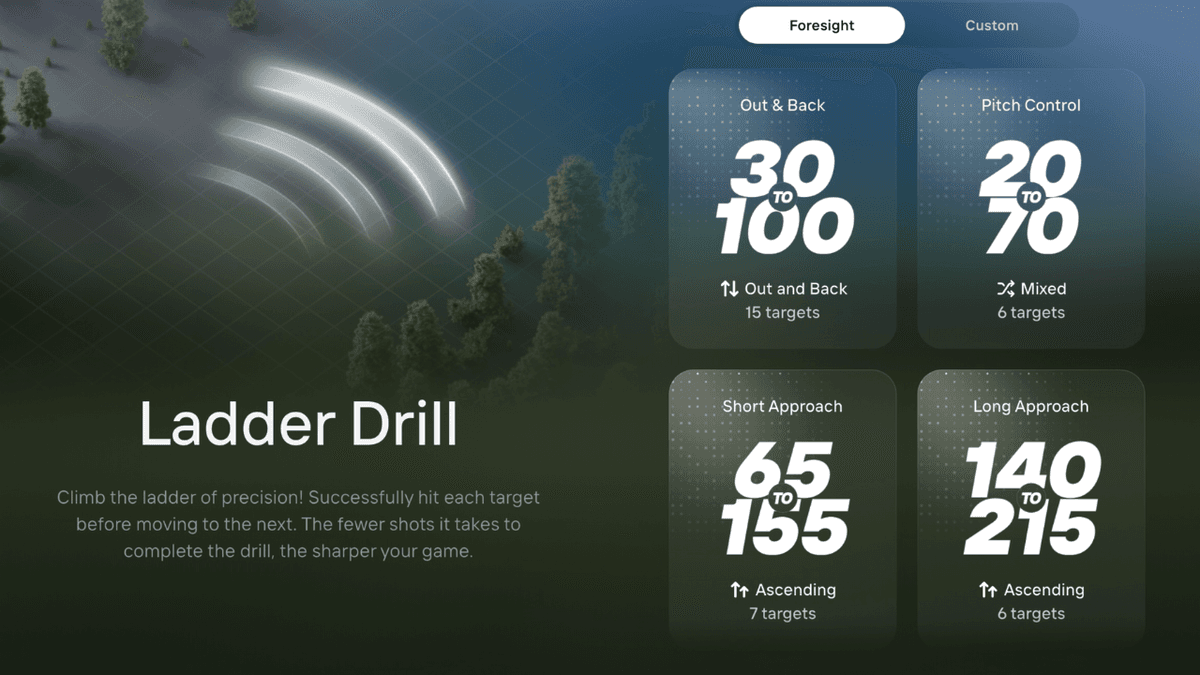
| Silver | $199/yr | Unlimited history; dispersion, tags and zones views; Ladder Drill and Target Practice; challenges; Course Pass eligibility; access to previously purchased FSX Play courses where available. |
| Gold | $599/yr | Everything in Silver, plus swing video, multiple profiles (students, family), drills with real-course overlays, club comparison, earbud narration, and third-party software such as GSPro. |
| Course Pass | $295/yr | 35 Premier courses. Requires Silver or Gold. |
| Course Pass Pro | $595/yr | The full library of about 110 courses. Requires Silver or Gold. |
A few rules worth knowing before you buy:
Course Passes can't be bought alone. You need Silver or Gold first.
Memberships are billed annually and sales are final.
Memberships attach to your account, not the unit, so your history and settings move with you if you upgrade hardware.
Premier runs on Windows 10 or 11 only. There's no Mac version.
Existing FSX licenses keep working and still get bug and security fixes, but all new features are Premier-only. FSX licenses don't transfer when you sell a unit, which affects used prices.
GSPro and other third-party software
GSPro is the most popular third-party simulator among serious players, largely for its huge library of community-built courses. On a new Foresight unit, it requires an active Foresight+ Gold membership (trials don't count) or an existing FSX license, plus GSPro's own annual fee of about $250. Foresight sells a one-year GSPro code; after that, GSPro bills you directly. Awesome Golf is also supported through a separate license.
The Foresight app
The free iOS and Android app handles range sessions, session review and drills. Two features are especially useful for tournament players: MyBag, which builds your stock carry yardages, and the Ladder Drill, which tests distance control (Silver and up).
The real cost of ownership
The hardware price is only part of it. Here's what each unit costs over three years at the most common membership levels, ignoring the free 30-day trial and any future sales.
| Setup | Yearly software | GC2 (3 yrs) | GC3 at $3,999 (3 yrs) | GCQuad (3 yrs) | QuadMAX (3 yrs) |
|---|---|---|---|---|---|
| Free tier only | $0 | $1,699 | $3,999 | $15,999 | $19,999 |
| Silver (practice and tracking) | $199 | $2,296 | $4,596 | $16,596 | $20,596 |
| Silver + Course Pass (35 courses) | $494 | $3,181 | $5,481 | $17,481 | $21,481 |
| Gold + GSPro | about $849 | $4,246 | $6,546 | $18,546 | $22,546 |
| Gold + Course Pass Pro (everything) | about $1,194 | $5,281 | $7,581 | $19,581 | $23,581 |
Two takeaways. First, on the GC2, three years of the full software package costs more than twice the hardware, so decide honestly how much course play you'll do. Second, a GC3 on the free tier still gives you ball and club data for life, which makes it the most complete no-subscription unit Foresight sells at its price.
Using a Foresight unit on the range and on the course
Photometric units are at their best outdoors, because they photograph the ball rather than tracking its flight. You don't need a long range to get full data, and you don't need special balls. That makes all four units useful well beyond the simulator room.
Picking a unit for outdoor practice
Screen: all four can run without a phone. The GC2's color screen and the QuadMAX's touchscreen are the easiest to read and change in the field.
Battery: for a full day of lessons, a qualifier warm-up plus a range session, or a fitting, the GCQuad and QuadMAX's swappable batteries are a real advantage. The GC2 and GC3 have built-in batteries rated for 5 to 7 hours.
Hitting zone on grass: the GCQuad and QuadMAX's 18 x 14-inch zone lets you hit from a divot line without resetting every few shots. The GC3's 7 x 10-inch zone means more adjustment.
Weight: the GC2 (4.5 lb) and GC3 (5 lb) fit easily in a range bag. Both Quad units are bigger, though the QuadMAX is more than a pound lighter than the GCQuad.
Carry bag: GCQuad and QuadMAX packages include a carry bag. The GC2 box doesn't list one, so budget for a case if it's traveling.
Turning numbers into on-course yardages
For tournament players, the most valuable thing a launch monitor does is give you numbers you trust when you're standing over a shot that matters. A simple routine:
Hit off grass with your gamer ball. Mat strikes and range balls skew carry and spin. Test the ball model you play in competition.
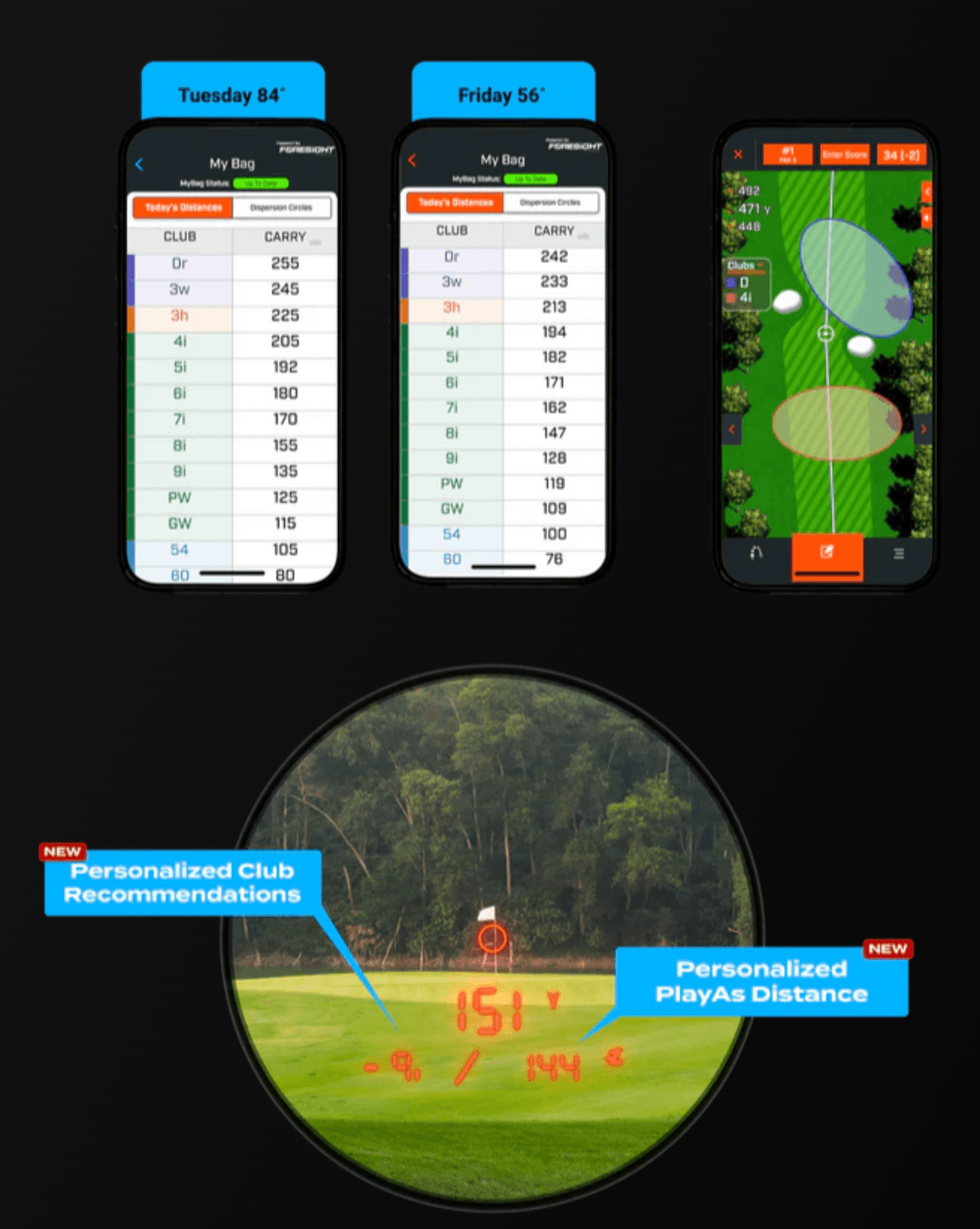
Build MyBag. Hit enough shots per club to get a reliable average carry and dispersion, and update it after equipment changes or a long layoff.
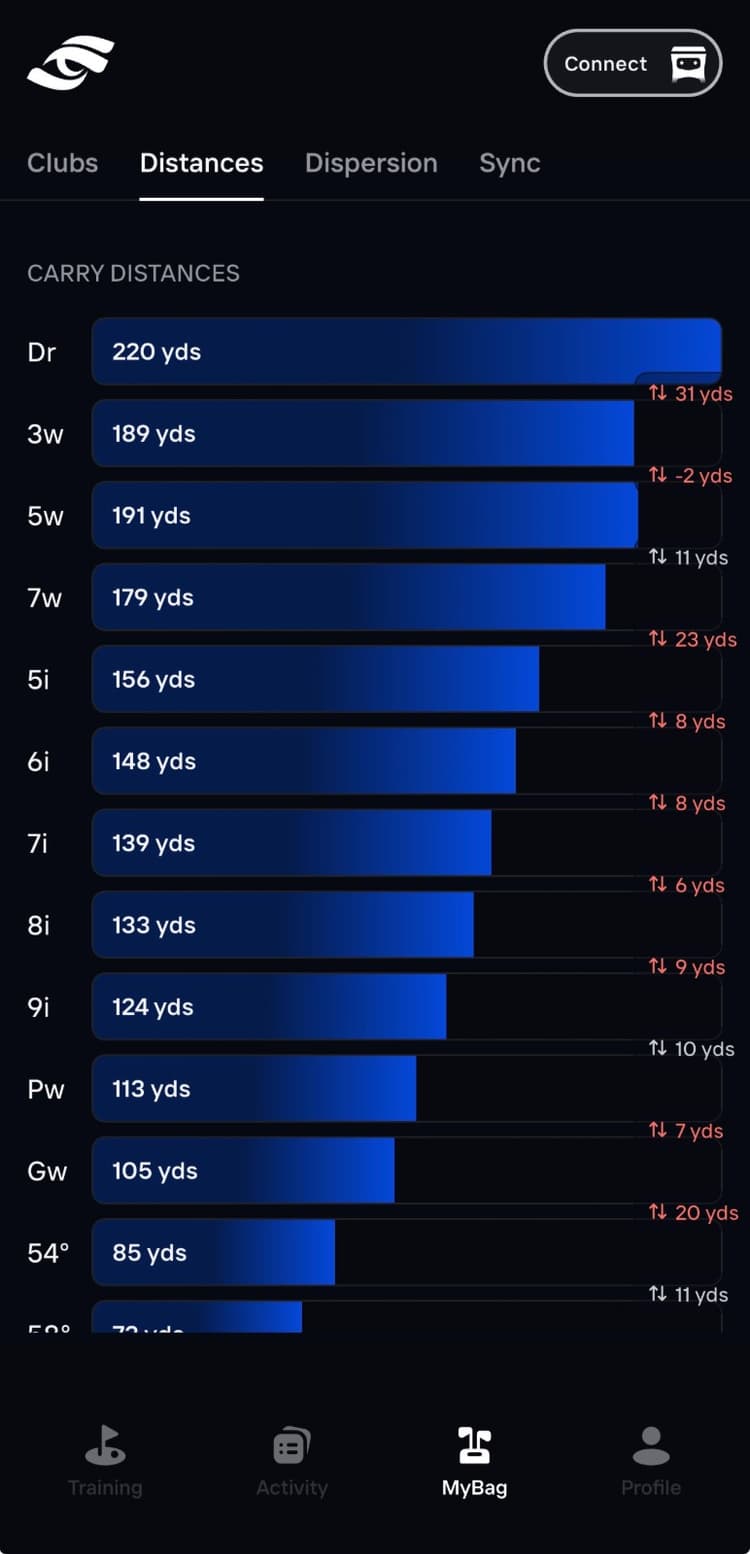
Check your gaps. Look for overlaps or holes of more than 15 yards, especially in wedges and between your longest iron and your fairway woods.
Account for conditions. Compare numbers at your home elevation to the elevation of the event you're playing.
Take it to the course. Bushnell's Pro X3 LINK rangefinder ($599.99) syncs your MyBag yardages from a Foresight or Bushnell launch monitor and suggests a club in the viewfinder. A locking switch turns off Slope and Elements, making it conforming for tournament play. Pair your carry numbers with a green-reading and yardage book, such as StrackaLine, for practice rounds.
Building a simulator around a Foresight unit
Any of the four units can run a home simulator. Here's what else you need and what to plan for.
Room
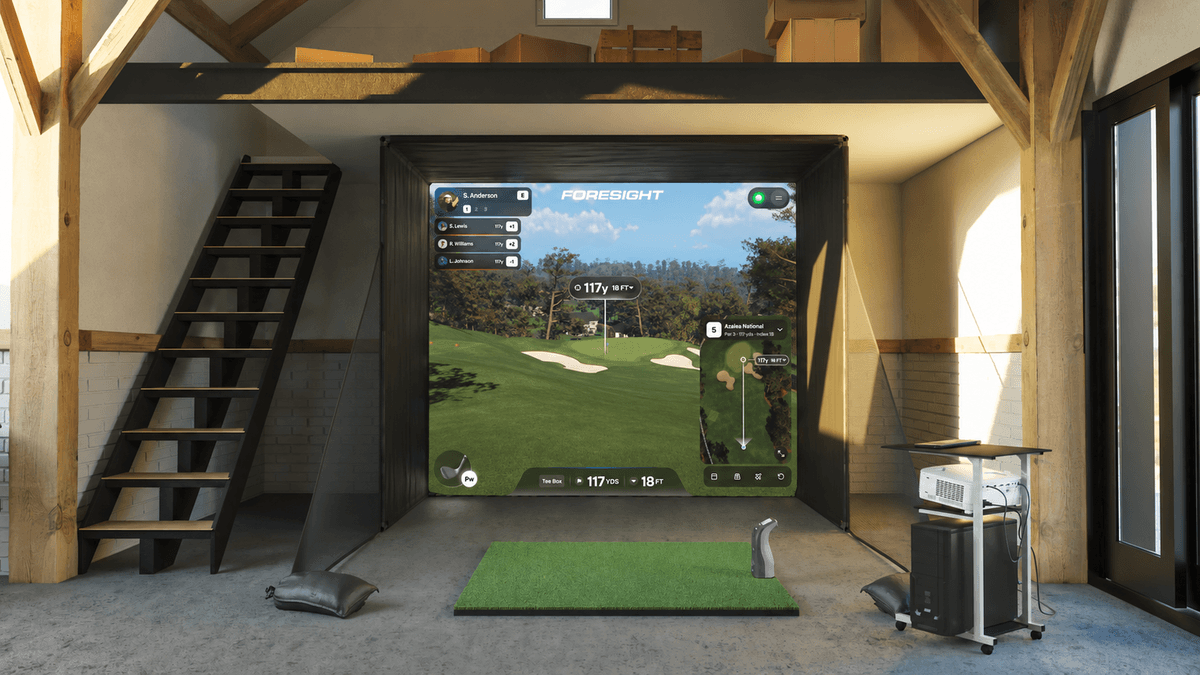
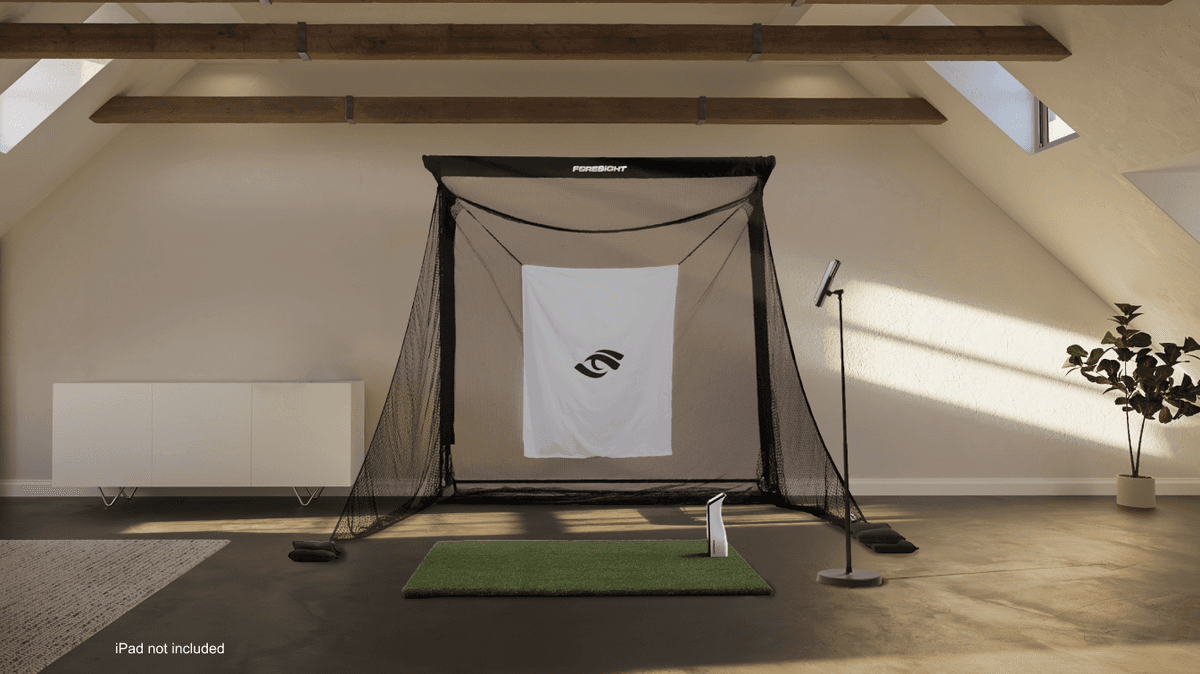
For floor units, plan on a room about 10 feet wide with at least 9 feet of ceiling, and more like 9.5 feet to swing driver comfortably. Depth depends on the setup: Foresight's SIM IN A BOX net is 10 feet deep, and a screen-and-projector enclosure usually needs a few feet more. Photometric units sit beside the ball, so depth isn't driven by the launch monitor the way it is with radar units, which need extra space behind the golfer.
Screen or net
A hitting net is the cheapest start and works indoors or outside. For course play, an impact screen and enclosure (Carl's Place, Foresight's own SIM IN A BOX, and others) gives you a projected image and protects the walls.
Hitting mat
Don't economize here. A mat that's too firm can hurt your wrists and flatters fat shots. Popular premium options include Fiberbuilt and TrueStrike, while Carl's HotShot is a common mid-range choice with a replaceable hitting strip. Make sure the mat's hitting area lines up with your unit's hitting zone, especially on a GC3 or GC2.
Projector
A short-throw projector mounted behind or above the golfer limits shadows and stays out of the line of fire. Look for 4K resolution, 3,000 lumens or more for rooms with some light, and flexible aspect-ratio support to fill the screen. BenQ's AK700ST and LK936ST are common sim-room picks.
Gaming PC
Foresight Premier needs a Windows gaming PC. Foresight's minimum is a Core i5-12500 or Ryzen 5 5600, 16GB of RAM and an 8GB graphics card such as an RTX 3060 Ti or 4060 Ti. The recommended spec for maxed-out 1080p or medium 4K is a Core i7-12700K or Ryzen 7 7700X, 32GB of RAM and a 12GB card such as an RTX 4070. Budget extra if you're running GSPro at high settings.
Packages
Foresight's SIM IN A BOX Net package includes the launch monitor, a net and mat, a gaming laptop and software. Foresight lists it at $9,999 with a GC3, $18,999 with a GCQuad and $22,999 with a QuadMAX, and the GC2 is also offered in a Net package. Note that the package pages still list FSX software in the bundle, so confirm what software you'll actually receive. Retailers also sell DIY enclosure packages for each unit.
How Foresight compares with other launch monitors
If you're cross-shopping, these are the units competitive amateurs most often compare against Foresight. Prices are approximate retail as of fall 2026 and change often.
| Launch monitor | Approx. price | Technology | Worth knowing |
|---|---|---|---|
| Square Golf Omni | $1,599 | Four-camera photometric | The GC2's closest rival. More data and no maker subscription, but a newer brand, and it has been sold out with a waitlist. |
| FlightScope Mevo Gen2 | $1,299 | Radar plus image processing | Strong outdoors; needs more room indoors and help reading spin. |
| Bushnell Launch Pro | $2,999.99 | Three-camera photometric (Foresight-built) | Same platform as the GC3, but club data needs Silver, and it's now only about $1,000 cheaper than a GC3 on sale. |
| Uneekor EYE MINI | $2,999 | Dual-camera photometric | Includes club impact video; popular for simulators. |
| Garmin Approach R50 | $4,999.99 | Three-camera photometric | Built-in 10-inch screen and its own simulator, no PC needed; heavier unit. |
| Full Swing KIT | $4,999 | Radar | Portable and outdoor-friendly; needs space behind the golfer. |
| TrackMan iO | From $13,995 | Ceiling-mounted radar plus cameras | Indoor only and permanently installed. Compare with the Foresight Falcon, not the portable units. |
For more on the radar-vs-camera question, see Foresight vs. TrackMan: the key differences for amateur golfers.
Buying tips
Check for bundles, not just price. GC3 deals have included a rangefinder and carry bag at the sale price.
Use the trial on purpose. Spend the 30-day Gold trial testing what you'd actually pay for, then pick a tier. Cancel before it renews if you'll stay on the free tier.
Be careful buying used. FSX licenses don't transfer with the hardware. A used unit sold since September 18, 2026 runs on Foresight+.
Warranty differs. GC2 and GC3 carry one year; GCQuad and QuadMAX carry two.
Budget for the room, not just the unit. A good mat, screen, projector and PC can cost as much as a GC3.
Frequently asked questions
Does the new Foresight GC2 measure clubhead speed?
No. The GC2 measures ball data only: ball speed, launch angle, launch direction, spin and carry, with calculated values such as total distance, peak height and descent angle. Clubhead speed, smash factor, path and angle of attack start with the GC3.
Do I need a subscription to use a Foresight launch monitor?
No. The free tier shows live data in the Foresight app and Premier, includes MyBag, and stores 10 sessions. On the GC3, GCQuad and QuadMAX, the free tier includes club data. You need Silver ($199/yr) for unlimited history and drills, Silver or Gold plus a Course Pass to play courses, and Gold ($599/yr) for GSPro.
Does Foresight work with GSPro?
Yes. New units need an active Foresight+ Gold membership (not a trial) or an existing FSX license, plus GSPro's own annual subscription.
Can I use a Foresight launch monitor outdoors?
Yes. All four portable units work on the range, on grass and on the course, and camera-based units don't need a long ball flight to read the shot.
Does Foresight Premier run on a Mac?
No. Premier runs on Windows 10 or 11. The Foresight app runs on iOS and Android.
Is the GC3 accurate enough for club fitting?
For ball data, yes. For a full fitting, most fitters want face angle, impact location and loft and lie at impact, which require a GCQuad or QuadMAX.
Is the QuadMAX worth $4,000 more than the GCQuad?
If you want putting analysis, probably. The putting add-on for a GCQuad runs about $2,500, and the QuadMAX includes it along with a touchscreen, a lighter body and longer battery life. If you'll never use putting data, buy the GCQuad.
How much space do I need for a Foresight simulator?
Plan for roughly 10 feet wide and 9 to 9.5 feet of ceiling height. A net setup can fit in about 10 feet of depth; a screen and enclosure needs more.
The verdict
For most competitive amateurs, the GC3 at $3,999 is the pick in 2026. It measures the ball and the club, its club data is free, and it now sells for $3,000 below its old list price. Buy the GC2 if your goal is gapping and tournament prep on the tightest budget. Step up to the GCQuad if you coach, fit, or work on face and strike. Choose the QuadMAX if you want putting and the best hardware in one box.
Whichever you choose, run the three-year software math before you buy. With Foresight+, the membership you pick can cost more than the hardware.